

Abstract
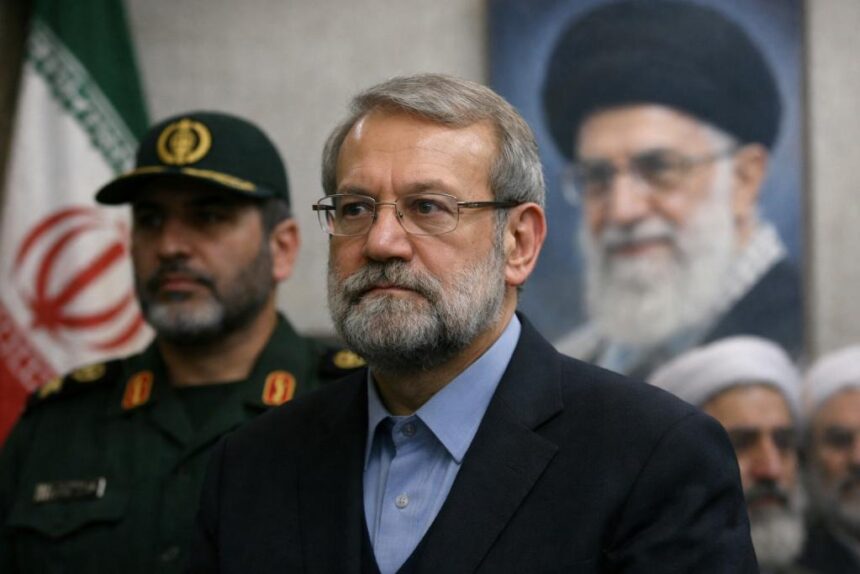
This report examines the political trajectory and elimination of Ali Larijani, one of Iran’s most influential figures across parliament, security, and diplomacy. It traces his career milestones from his revolutionary roots in 1979 through his leadership of state media, his role as nuclear negotiator, and his long tenure as Speaker of Parliament. The analysis highlights Larijani’s family background within the powerful Larijani clan, his alliances and rivalries inside the Iranian regime, and his role as a civilian bridge to the Revolutionary Guard and proxy networks. The report explores case studies — including nuclear negotiations, parliamentary leadership, hostage crises, and the Iran Contra era — while assessing Larijani’s strengths and weaknesses. It evaluates scenarios following his elimination in March 2026, identifying risks of hardliner consolidation, elite fragmentation, and pragmatic realignment. Finally, it provides a forward-looking assessment of how Larijani’s absence may affect succession politics after Supreme Leader Khamenei, with implications for governance, diplomacy, and regional stability. By combining narrative analysis, visual timelines, and risk matrices, the report offers a dynamic and comprehensive view of Larijani’s legacy and the strategic uncertainties facing Iran’s leadership.1. Career Timeline
Career Highlights of Ali Larijani
1979–1980s: Revolutionary Roots
- Active supporter of the Islamic Revolution.
- Aligned with factions backing the U.S. embassy seizure. 1
1980s–1990s: Media Leadership
- Head of Islamic Republic of Iran Broadcasting (IRIB).
- Used state media to consolidate regime narratives and strengthen clerical legitimacy.2
2005–2007: Nuclear Negotiator
- Appointed Secretary of the Supreme National Security Council.
- Balanced IRGC hardline positions with EU-3 diplomacy.
- Resigned in 2007 due to clashes with President Ahmadinejad’s confrontational style.3
2008–2020: Speaker of Parliament
- Stabilized parliament during sanctions and crises.
- Mediated between reformists and conservatives.
- Strengthened ties with clerical networks and IRGC budgets.4
2. Family Background — The Larijani Clan
The Larijanis are a clerical-political dynasty rooted in Qom and Najaf. Their father, Ayatollah Mirza Hashem Amoli, was a respected cleric. The brothers spread influence across judiciary, parliament, diplomacy, and academia:- Ali Larijani — Parliament Speaker, nuclear negotiator
- Sadeq Larijani — Judiciary Chief (2009–2019), now Expediency Council Chair
- Mohammad Javad Larijani — Judiciary and human rights figure
- Bagher Larijani — Academic and medical leader
- Fazel Larijani — Diplomat and academic
3. Intrigues Inside the Regime
Ali Larijani’s career was shaped by strategic alliances and rivalries:Trusted by:
- Supreme Leader Ayatollah Khamenei (as a pragmatic stabilizer)
- Foreign Minister Abbas Araghchi (during nuclear negotiations)
- Clerical networks in Qom
Rivalries with:
- Mahmoud Ahmadinejad (clashed over executive authority)
- IRGC hardliners (viewed him as too moderate)
- Reformist grassroots (criticized him as part of the elite)
Recent Relations:
- With President Masoud Pezeshkian: cautious cooperation
- With MFA Araghchi: shared pragmatic diplomacy
4. Role in Revolutionary Guard and Proxy Networks
- Larijani acted as a civilian bridge to the IRGC, securing parliamentary support for military budgets.
- Supported Iran’s proxy strategy in Lebanon, Iraq, and Syria.
- Helped institutionalize Hezbollah’s role as Iran’s most effective regional proxy.6
5. Case Studies
Nuclear Negotiations (2005–2007)
Balanced IRGC hardline positions with EU-3 diplomacy. Resigned in 2007 due to Ahmadinejad’s confrontational style.7Parliamentary Leadership (2008–2020)
Stabilized parliament during sanctions, mediating between reformists and conservatives.8Hostage Crises & Irangate
- Aligned with factions supporting the 1979 embassy seizure.
- Facilitated Iran’s indirect role in Hezbollah’s hostage operations.
- Benefited from Iran-Contra era networks, learning institutional cover strategies.
6. Strengths and Weaknesses
| Strengths | Weaknesses |
|---|---|
| Pragmatic negotiator trusted by conservatives and moderates | Viewed by hardliners as overly moderate |
| Deep networks across IRGC, clerical, and political institutions | Family dominance fueled accusations of nepotism |
| Stabilizing presence during sanctions and crises | Limited appeal among reformist grassroots |
7. Scenarios After Larijani’s Elimination
| Scenario | Description | Non-Technical Risk |
|---|---|---|
| Hardliner Consolidation | IRGC and ultraconservatives dominate policy | Higher sanctions risk, reputational damage, escalation with U.S./Israel |
| Elite Fragmentation | Rival factions compete without Larijani’s stabilizing role | Political instability, unpredictable regulatory environment |
| Pragmatic Realignment | Moderates or technocrats fill vacuum | Fragile openings for diplomacy, reversible under pressure |
8. Non-Technical Risk Assessment
- Governance Risk: Elite fragmentation weakens institutional coherence.
- Reputational Risk: Engagement with Iran may be viewed negatively if IRGC dominance grows.
- Operational Risk: Sanctions and instability disrupt energy, finance, and logistics.
- Diplomatic Risk: Loss of moderating voices complicates negotiations, increasing volatility in alliances.
9. Forward-Looking: Iran’s Succession Politics After Khamenei
Ali Larijani was widely seen as a potential kingmaker in Iran’s post-Khamenei era. His elimination removes a stabilizing figure who could have mediated between IRGC hardliners, technocrats, and clerical elites.Without Larijani:
- IRGC may push for a military-aligned successor.
- Clerical factions lose a key bridge to political institutions.
- Moderate technocrats face marginalization.
Possible Outcomes:
- Power Vacuum: Intensified competition among IRGC, judiciary, and clerics.
- Hardliner Ascendancy: Greater risk of regional escalation and internal repression.
- Technocratic Pivot: If Pezeshkian and Araghchi gain traction, diplomacy may re-emerge — but fragile.
10. Conclusion
Ali Larijani’s elimination marks a turning point in Iran’s internal balance. His absence removes a pragmatic stabilizer who mediated between parliament, IRGC, and clerical leadership. The future trajectory depends on whether hardliners consolidate or moderates realign. Each scenario carries distinct risks — from escalation with the U.S. and Israel to fragile openings for engagement.Contents
- Abstract
- 1. Career Timeline
- 2. Family Background — The Larijani Clan
- 3. Intrigues Inside the Regime
- 4. Role in Revolutionary Guard and Proxy Networks
- 5. Case Studies
- 6. Strengths and Weaknesses
- 7. Scenarios After Larijani’s Elimination
- 8. Non-Technical Risk Assessment
- 9. Forward-Looking: Iran’s Succession Politics After Khamenei
- 10. Conclusion
- Endnotes