

- A Short Declaration, Broad Strategic Implications
- 1. Reaffirming Collective Defence: Necessary, but Not Sufficient on Its Own
- 2. Defence Investment: From Budget Targets to Production Capacity
- 3. Defence Industry and Trade Barriers: The Invisible Front of the New Deterrence
- 4. A Modernised NATO: Technology Is No Longer a Supporting Element
- 5. Support for Ukraine: From Solidarity to Predictable Financing
- 6. Hybrid Threats, Iran, and Hormuz: A Broad Security Space in a Narrow Text
- 7. Strengths: Why Does the Declaration Matter?
- 8. Limitations: What Does the Text Leave Open?
- Conclusion: The Real Test Will Be Whether Commitments Are Put into Practice
- In Brief
- Source Note
Key Argument
A Short Declaration, Broad Strategic Implications
NATO declarations are not always judged by their length; their importance often lies in the words they place side by side. The Ankara Summit Declaration is one such text. At first glance, this brief six-paragraph document may appear to repeat familiar alliance formulations: collective defence, the transatlantic bond, the Russian threat, terrorism, support for Ukraine, defence investment, and resilience. Yet a deeper reading shows that NATO is no longer explaining only what it stands against; it is also describing the production, financing, and technological architecture through which it intends to sustain fit-for-purpose defence industrial capacity.
For this reason, it would be incomplete to read the Ankara Declaration merely as a statement of solidarity. The text establishes a new connection within the Alliance’s security logic among defence spending, ammunition production, unmanned systems, artificial intelligence, cyber and space capabilities, and long-term assistance to Ukraine. In other words, NATO is increasingly defining deterrence not only through the appearance of unity, but through capabilities that can actually be delivered.
The purpose of this article is to assess the Declaration’s meaning at the Alliance level, without entering into the host-country dimension of the summit or the national policy context. Such a reading makes it possible to evaluate both the strengths and the limitations of the text in a more sober and objective manner.
1. Reaffirming Collective Defence: Necessary, but Not Sufficient on Its Own
The first paragraph of the Declaration reaffirms the collective defence commitment under Article 5 of the Washington Treaty and the transatlantic bond. According to this paragraph, the principle that an attack against one is an attack against all remains NATO’s raison d’etre; therefore, the reaffirmation of this principle was expected in any summit document, and that expectation was met. In the Ankara text, however, this repetition is not purely symbolic; it is framed against the background of Russia’s long-term pressure on Euro-Atlantic security, the spread of hybrid activities, and the rise of military competition.
Still, the real distinction of the text lies not in the Article 5 formula itself, but in the phrase that follows it: the approach of ‘360-degree deterrence and defence.’ This concept, particularly after the Russia-Ukraine war, indicates that the threat can no longer be reduced to a single front, a single category of weapon, or a single type of crisis. For NATO, the battlefield is no longer limited to land, sea, and air. Cyberspace, outer space, energy, data infrastructure, logistics corridors, and the resilience of public opinion are also part of the security equation. In this respect, the Declaration combines the language of traditional military defence with a broader security ecosystem.
The limitation of this section lies in its level of detail. The 360-degree approach is a broad concept, but it does not provide clear criteria on issues such as prioritisation, resource allocation, or the threshold at which a crisis becomes actionable. This is normal for NATO declarations; nevertheless, the way subsequent planning is carried out will be an important indicator for assessing the practical value of the text.
2. Defence Investment: From Budget Targets to Production Capacity
The most concrete aspect of the Ankara Declaration is its strong emphasis on defence investment and procurement capacity. The text states that European Allies and Canada increased their investments in core defence requirements by more than 139 billion dollars in 2025. It also records that new procurement decisions worth more than 50 billion dollars were announced in Ankara. These figures show that the Declaration is not merely a statement of principled solidarity; rather, it has the character of an implementation document that seeks to generate concrete results through spending, procurement, and production capacity.
The critical transformation here is that defence spending is no longer regarded as a sufficient measure in itself. Real deterrence emerges only when allocated budgets are supported by ammunition stocks, air and missile defence systems, unmanned platforms, logistical readiness, maintenance and repair capacity, and rapid procurement mechanisms. For this reason, the Ankara Declaration places the defence industrial base, supply chains, and collective production capacity at the centre of NATO’s strategic agenda.
Even so, this section contains an important implementation risk. Major procurement decisions do not always translate into rapid delivery. Expanding production lines requires certification, standards alignment, access to critical raw materials, workforce capacity, and long-term order guarantees. The Declaration acknowledges these problems, but it does not set out the architecture for solving them in detail. Therefore, the success of the text will be measured by how much of the announced figures is transformed into real capability in the period ahead.
3. Defence Industry and Trade Barriers: The Invisible Front of the New Deterrence
The call in the Declaration to reduce defence trade barriers and to use NATO partnerships to deepen defence industrial cooperation may appear technical, but it carries significant political consequences. In modern defence planning, the problem is not only which system will be produced; it is also the standard to which that system will be built, the supply chain on which it will rely, the security clearances it will require, the model of co-production that will be used, and the timeframe within which it will be delivered.
In prolonged wars and crises, stocks are rapidly depleted and peacetime procurement models prove inadequate. For this reason, NATO’s more direct engagement with industry amounts to an acknowledgement that the defence economy requires a security logic distinct from the logic of civilian markets. In this respect, the Ankara text positions the Alliance’s industrial readiness not as a complement to military readiness, but as one of its essential components.
Yet removing trade barriers is not an easy objective. Export controls, concerns over technology transfer, intellectual property, national industrial protectionism, security classifications, and procurement priorities can create tensions among Allies. Thus, this part of the Declaration requires administrative and legal alignment beyond political intent. The value of the text will be determined by concrete standardisation and mutual-trust mechanisms in this field.
4. A Modernised NATO: Technology Is No Longer a Supporting Element
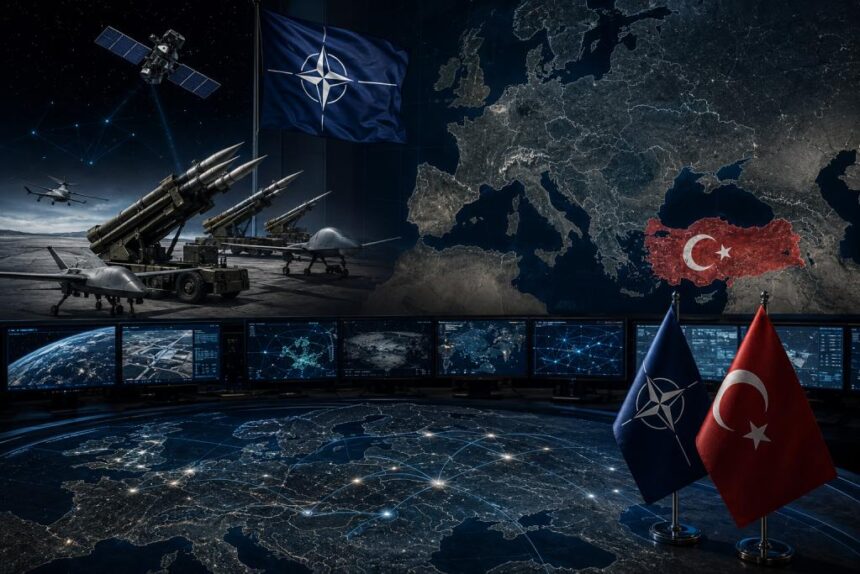
The third paragraph of the Ankara Declaration is the section most focused on the future and the one that most clearly sets out NATO’s transformation vision. The Declaration underlines that the Alliance’s deterrence and defence architecture rests on a balanced combination of nuclear, conventional, and missile defence capabilities, complemented by capabilities in space and cyberspace. In addition, deep precision strike, integrated air and missile defence, unmanned systems, advanced technologies, intelligence capacity, an interoperable transatlantic war cloud, and AI-enabled solutions are highlighted as fundamental elements of the security architecture of the future.
This approach shows that NATO defines future military superiority not only by the number of platforms or the scale of firepower, but also by the speed of data processing, the continuity of command and control, seamless integration between sensor and shooter, multi-layered air defence, and AI-supported decision-making processes. In other words, superiority on the battlefield is no longer measured simply by possessing more weapons, but by building force structures capable of producing, analysing, and operationalising information more rapidly.
The fact that unmanned systems are highlighted as a separate heading in the Declaration is not accidental. Recent conflicts have shown that unmanned platforms that can be produced at low cost, deployed rapidly, and used according to a swarm logic can generate operational and strategic effects far beyond those of many traditional weapons systems. This points to a future battlespace in which network-centric integration, flexibility, and technological adaptation will matter more than mere quantity.
At the same time, the Declaration’s technology-focused approach raises several important questions. The first is the ethical, legal, and operational security framework within which next-generation capabilities such as artificial intelligence, the war cloud, and autonomous systems will be used. The second is the extent to which these high-technology capabilities can be made interoperable among all Allies, despite different defence industrial infrastructures and varying levels of technological maturity. The Ankara Declaration clearly indicates the direction of this technological transformation; however, it does not elaborate the institutional, legal, and technical governance mechanisms through which that transformation will be managed. For this reason, the most important limitation of the Declaration is that, despite setting out a strong vision, it has not yet concretised the implementation model.
5. Support for Ukraine: From Solidarity to Predictable Financing
Support for Ukraine is the politically weightiest section of the Declaration. The text states that Ukraine contributes to transatlantic security and emphasises that support for Ukraine’s defence of its freedom, sovereignty, and territorial integrity will continue. More importantly, it explicitly recognises the need for a fair, predictable, and long-term sustainable framework for that support.
The most concrete element of this section is the commitment to provide 70 billion euros in military equipment, assistance, and training for 2026, alongside the intention to maintain at least equivalent levels in 2027. This approach reflects an effort to move Ukraine policy from periodic assistance packages toward a more institutionalised financing model. The positive reference to the European Union’s multi-year financing decision also points to NATO-EU complementarity.
Nevertheless, the sustainability of the commitment depends on variables such as budget cycles, domestic political balances, production capacity, and the course of the war. The Declaration positions support for Ukraine as a strategic necessity; however, it does not provide a detailed framework on how this support will be linked to the eventual political settlement of the war. This shows that NATO continues to seek a careful balance between military assistance and diplomatic outcomes.
6. Hybrid Threats, Iran, and Hormuz: A Broad Security Space in a Narrow Text
The fifth paragraph is one of the sections that broadens the security perspective of the Ankara Declaration beyond the Euro-Atlantic geography and gives it a more global scope. In the Declaration, strategic competition, widespread instability, hybrid threats, and recurring crisis shocks are listed among the main factors shaping NATO’s security environment. This approach shows that the Alliance no longer focuses solely on scenarios of conventional military attack, but also treats lower-intensity yet persistent risks – such as cyberattacks, disinformation, energy security, threats to critical infrastructure, and instruments of economic pressure – as integral parts of the security agenda.
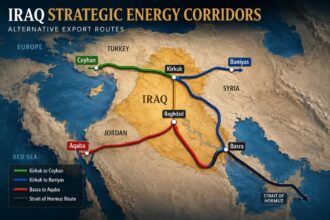
In the same paragraph, the text clearly emphasises that Iran must not acquire nuclear weapons and calls for full respect for freedom of navigation in the Strait of Hormuz. This emphasis demonstrates that NATO is closely monitoring not only military balances, but also global energy security, the uninterrupted functioning of international maritime trade routes, and the impact of regional crises on Euro-Atlantic security. The specific reference to the Strait of Hormuz underlines that sea lines of communication, energy flows, and critical trade corridors have become as strategically important in today’s security understanding as military deterrence itself.
However, this section of the Declaration also contains a significant limitation. The references to Iran and the Strait of Hormuz carry strong political messaging value, but the text does not provide a concrete framework for the diplomatic, military, or economic tools through which these objectives will be supported. Put differently, the Declaration correctly identifies the threats and widens NATO’s field of concern, yet it does not go into detail on the policy instruments, crisis-management mechanisms, or operational methods to be used against these threats. For that reason, the fifth paragraph is important in terms of strategic orientation, but limited in terms of policy-tool generation; it is a framework text that deliberately leaves the details to subsequent policy documents.
7. Strengths: Why Does the Declaration Matter?
The strongest feature of the Ankara Declaration is its ability to bring strategic discourse together with concrete capability objectives. The text does not merely identify threats in the security environment; it also sets out actionable policy areas in response to them, such as defence investment, the strengthening of the defence industry, technological transformation, and long-term support for Ukraine. In this respect, the Declaration moves beyond NATO’s traditional declaratory language and points toward a performance- and results-oriented security understanding. The fact that strategic objectives are linked to budgets, production capacity, and technology investment at this scale is one of the features that distinguishes the text from earlier summit declarations.
A second important strength of the Declaration is its emphasis on European Allies and Canada assuming a larger share of the security burden. This approach does not mean that the transatlantic bond is weakening. On the contrary, it reflects a new burden-sharing logic that seeks to distribute the security load more evenly with the United States and to strengthen the sustainability of the Alliance. A more balanced distribution of responsibilities emerges as an important factor that will support not only NATO’s military capacity, but also its long-term political resilience and institutional cohesion.
The third strength of the Declaration is that support for Ukraine is built on the principles of predictability and sustainability. It is now clear that, in prolonged conflicts, irregular, short-term, and fragmented assistance models struggle to produce strategic effect. The Ankara Declaration correctly diagnoses this problem and seeks to place support within a planned, multi-year framework. In doing so, it aims to transform assistance to Ukraine from a temporary commitment dependent solely on political will into a more institutionalised security architecture based on predictable financing, planned military assistance, and long-term capacity building.
Within this framework, the Ankara Declaration shows that NATO aims not merely to be an alliance that reacts to current crises, but to build a more prepared and more resilient security architecture that integrates defence planning, industrial production, and technological transformation with long-term strategic objectives. This approach constitutes the Declaration’s most striking and powerful strategic message.
8. Limitations: What Does the Text Leave Open?
The Limitations of the Declaration: Strong Vision, Unclear Implementation
Although the Ankara Declaration sets out NATO’s future strategic orientation clearly and forcefully, it leaves many critical details concerning the implementation of that vision to later stages. This is, in fact, inherent in the nature of summit declarations. Such texts are intended to express broad political will; implementation details are subsequently shaped through military plans, budget decisions, and technical regulations. Yet from the perspective of an objective assessment, the Declaration’s most important limitation appears precisely at this point.
For example, the Declaration does not offer a concrete roadmap on the timetable within which defence spending will turn into real military capabilities, how quickly announced procurement decisions will be reflected in the field, how defence industrial production will be accelerated, or under which institutional and legal framework next-generation technologies such as artificial intelligence and the ‘war cloud’ will be governed. Similarly, it does not clearly define how mechanisms designed to facilitate defence trade among Allies will operate. Thus, while the Ankara Declaration offers a strong strategic framework that indicates the direction of travel, it leaves the question of how implementation will be achieved largely to future decisions.
A second important limitation of the Declaration is the breadth of the threat spectrum it covers. Russia, terrorism, hybrid threats, strategic competition, cyberattacks, Iran, energy security, and the protection of maritime routes are all addressed within the same text. This approach is meaningful insofar as it reflects NATO’s 360-degree security understanding. However, such a broad security agenda also carries the risk of making prioritisation more difficult. No alliance has unlimited resources. It is not easy to direct resources, industrial capacity, and political attention to such a wide range of threats at the same time. Therefore, the success of the Ankara Declaration will be measured by the extent to which NATO can translate this broad strategic agenda into concrete plans according to a clear order of priorities.
Another important issue is that the Declaration says almost nothing about the economic and social costs of security policy. Increasing defence budgets is not only a military decision; it is also a far-reaching transformation that directly affects public finance, industrial policy, technology investment, skilled human resources, and political decision-making processes. Expanding defence production requires more investment, more specialised personnel, and a stronger industrial base. As a natural consequence, additional pressure may be placed on public budgets, and in some countries new political debates may emerge between social spending and defence spending. The Ankara Declaration establishes the security rationale forcefully, but it does not assess how the economic sustainability and social costs of this transformation will be managed.
In conclusion, the Ankara Declaration is an important political document that sets out a strong strategic vision and clearly indicates the direction NATO intends to take in the future. Nevertheless, the real success of the Declaration will be understood not from the objectives expressed in the text, but from the extent to which those objectives can be translated into concrete military capacity, defence industrial production, technological transformation, and sustainable financing. In other words, the Ankara Declaration clearly shows where NATO wants to go; however, the answer to the question of how fast and by which methods it will reach that destination will be shaped not by the Declaration itself, but by the political and military decisions to be taken in the coming years. For that reason, the success of the Declaration will be assessed not by the statements made on the day it was published, but by the degree to which its vision can be reflected on the ground.
Conclusion: The Real Test Will Be Whether Commitments Are Put into Practice
The Ankara Declaration is not a new strategy document that radically alters NATO’s understanding of security. Instead, it is an implementation-oriented roadmap showing that the objectives defined in recent years must now be turned into concrete results. Put differently, for the Alliance the central issue is no longer to announce new goals, but to implement existing goals in a timely and effective manner.
The most notable feature of the Declaration is that it does not simply repeat collective defence as a political commitment; it directly connects that commitment to defence spending, defence industrial production, technology investment, supply chains, and levels of military readiness. In doing so, NATO makes clear that deterrence is possible not only through political will, but also through production capacity, technological superiority, and sustainable military readiness.
However, the real success of the Declaration will be assessed not by the messages delivered on the day of publication, but by the extent to which these commitments are fulfilled in the coming years. Can the announced defence budgets actually be increased? Can the promised ammunition, air defence systems, and other military equipment be produced and delivered to Allied countries on schedule? Can the defence industry reach the expected level of production capacity? Can artificial intelligence and other advanced technologies be effectively integrated into NATO’s force structure? Can support for Ukraine be sustained over the long term regardless of shifting political will? The answers to these questions will be the key indicators determining the success of the Declaration.
Accordingly, the value of the Ankara Declaration will be determined less by the targets it sets out than by the degree to which those targets are reflected in practice. Its strength lies in the fact that it states NATO’s priorities clearly and realistically. At the same time, its most visible weakness is that it does not provide a detailed roadmap on the mechanisms through which these goals will be implemented and monitored.
In conclusion, the Ankara Declaration should be assessed not as a ‘document of promises’ for NATO, but in terms of implementation and the ability to put commitments into practice. The Alliance’s success will be measured not by the declarations it publishes, but by whether it can carry out the defence investments it announces, increase production capacity, bring technology projects to life, and fulfil the security commitments it undertakes on time. For this reason, the final assessment of the Ankara Declaration will not be made today, but through the concrete military, technological, and institutional results that emerge in the coming years.